

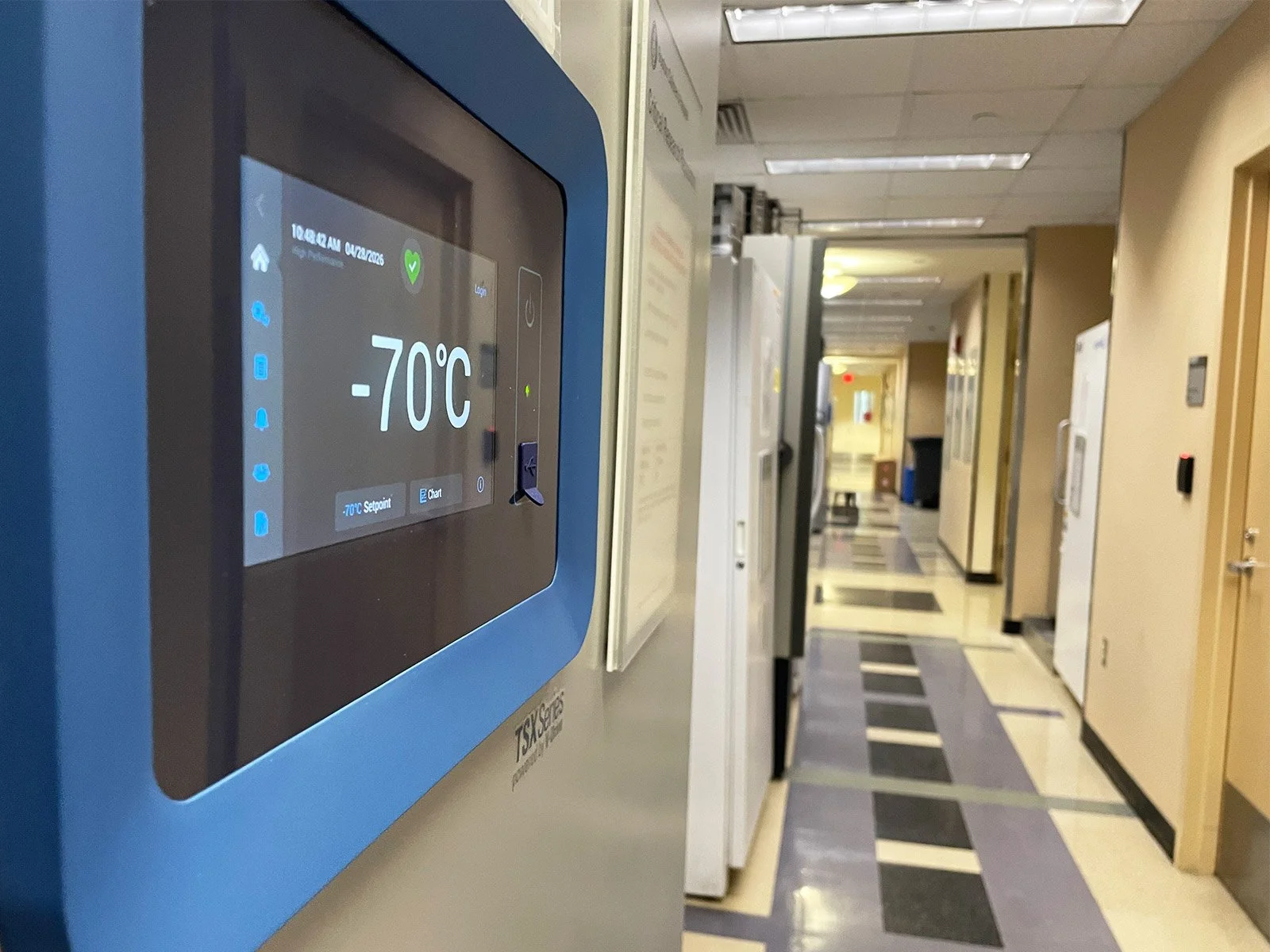
Since launching a grassroots sustainability initiative in 2020, the Boston Children’s Hospital (BCH) Green Labs program has expanded, helping to save the equivalent of the energy used by 89 homes each day—and reducing lab freezer failures by 68%. What’s behind all the improvements? A compelling “why.”
Tying green lab practices to a higher mission can drive scientists to adopt changes in labs. This was the first lesson Chuck Blanchette shared in his talk at our recent “Go Green” Symposium for eco-friendly biologists. Chuck is the Boston Children’s Hospital Green Labs Team lead and a Research Facility Manager. If you have goals to green your lab, I encourage you to watch Chuck’s presentation at our Go Green Symposium below. He shares specific insights from BCH’s journey, along with simple changes you can make in your lab today.
Watch Research Facilities Manager Chuck Blanchette present practical strategies for more reliable, efficient research labs at the 2026 Go Green Symposium.
Aligning lab operations with the mission to protect children’s health
Boston Children’s Hospital has 3,000 researchers and a special focus on translating discoveries made at the lab bench into pediatric bedside care. Their motto is “Until every child is well”. When working with researchers, Chuck points out that sustainability aligns with this mission because it’s about protecting the environment that kids grow up in and the research assets critical to advancing pediatric medicine.
Common challenges to cultural change in research labs: high turnover and tight science funding
Optimizing material and energy stewardship across a large, dynamic research environment is no small task. Research lab groups at BCH include principal investigators, postdoctoral fellows, technicians, lab managers and graduate and medical students. As is common in hospitals associated with grad and medical schools, many people who train in research labs move on within a few years. When high turnover is normal, ongoing communication is needed to keep green programs running smoothly. And of course, there are competing issues. BCH researchers face the same high-stakes science funding climate as researchers at any institution today. Science budgets are under the microscope.
A celebrated green labs program advances lab improvements
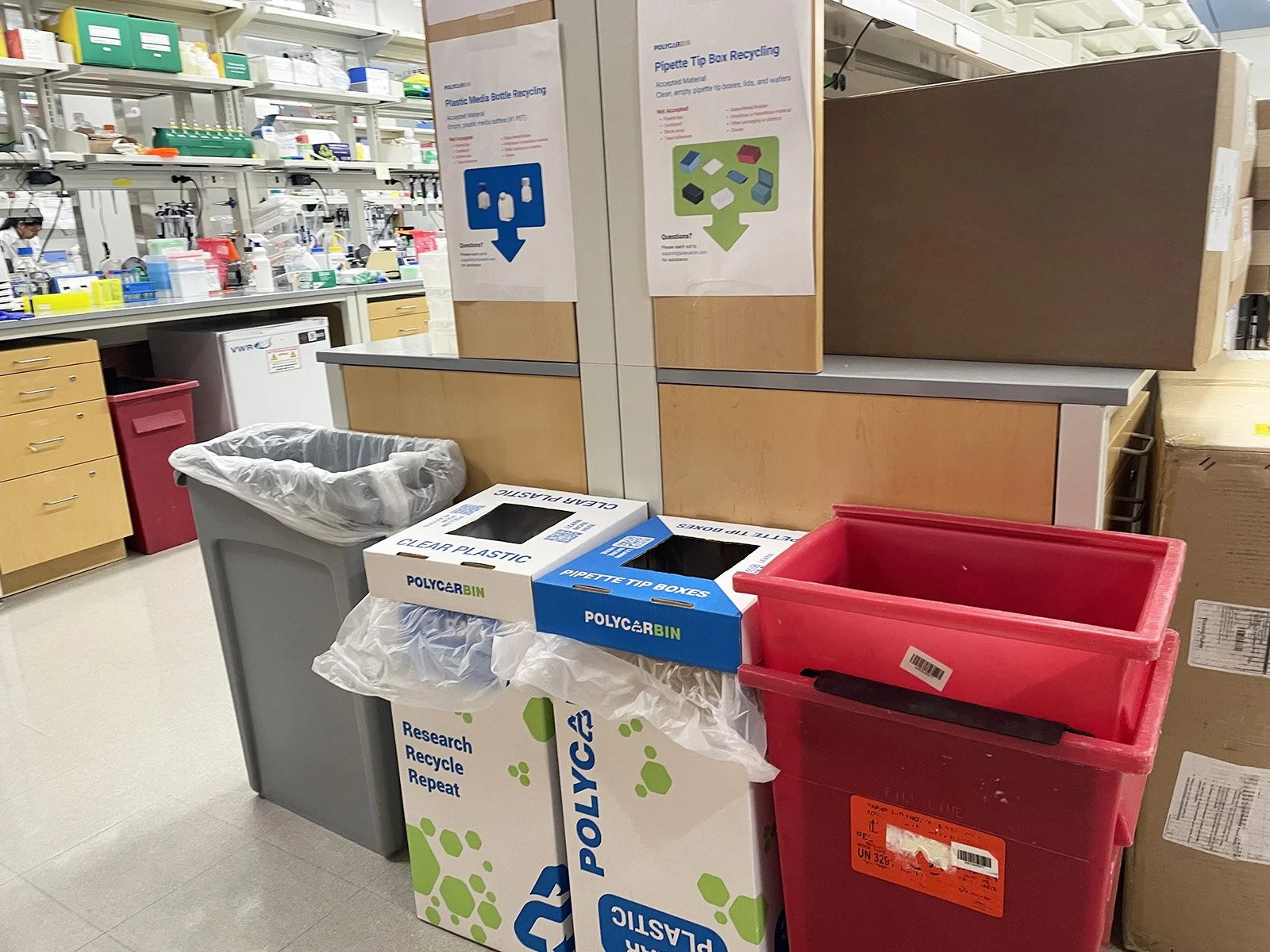
To support this mission at scale, Boston Children’s Hospital is supported by nine Green Labs core members and over forty green champions across departments. The program has impacted 1,500+ research staff enterprise-wide among 250 labs. In practice, the BCH Green Labs team focuses on fostering scientists’ competitive spirit, highlighting the economic value of optimizing the use of scientific equipment, and validating new greening programs through a pilot-prove-and-scale approach. Contests have helped drive uptake and long-term behavior change. Boston Children’s Hospital has won the top Clinical Organization Award in the International Freezer Challenge from 2022 to 2025. Over fifty labs have participated in the lab freezer challenge. Over a hundred metric tons of CO2 have been avoided. $13,000 in energy costs are saved each month. Frozen stocks and samples are more secure. Expensive freezer repairs and replacements have been avoided. Internally, participating labs use SWOOP (Switch Off Optimization Program) stickers on lab equipment to save energy without the fear of disrupting colleagues' experiments. Around two hundred research labs participated in a “Just Shut it” fume hood competition to save energy. In another coup, Chuck Blanchette led an ice pack second-life project, donating more than 4,700 to cheese farms since September of 2025. With a sustainability grant from Cell Signaling Technology®, BCH green labs piloted Polycarbin® lab recycling services, diverting ~16 tons of plastic so far. Together, these achievements reflect a coordinated, cross-lab effort. BCH Green Labs has been formally recognized by the International Institute of Sustainable Laboratories (I2SL) Awards Program for advancing sustainability in research environments.

Goodwill and teamwork are contagious
After visiting some research labs at Boston Children’s Hospital and speaking with a few of the people working there, my sense is that personal conviction and camaraderie are key elements of their success. Lab manager Erika Norabuena gave us a warm welcome and showed us her lab group’s setup for plastic recycling. Approachable and knowledgeable labmates like Erika are pivotal. A green lab champion uplifts labmates by helping with the day-to-day integration of new, more environmentally friendly practices.
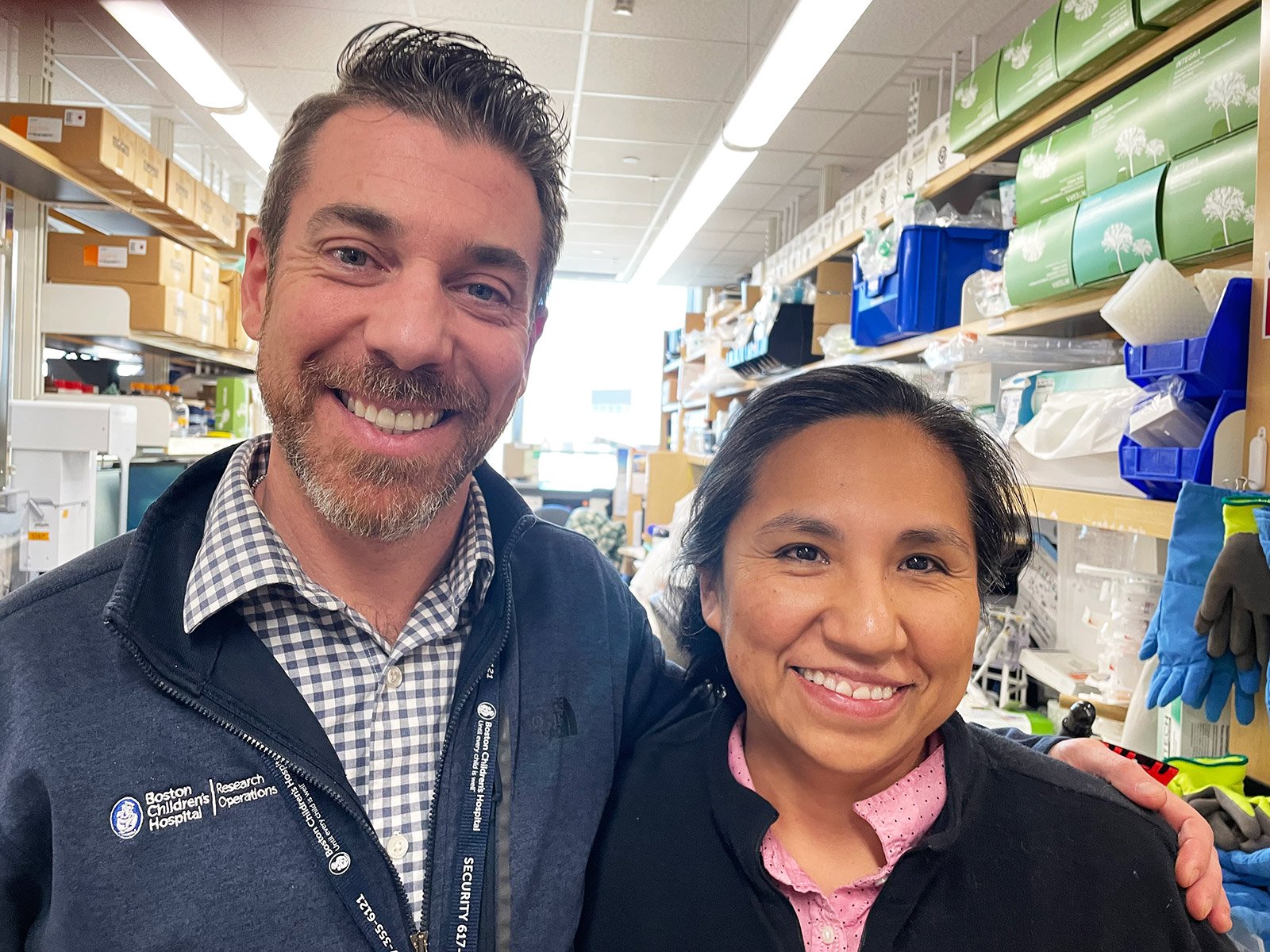
Human Neuron Core Lab Manager Erika Norabuena and Research Facility Manager Chuck Blanchette work together to support sustainability in research at Boston Children’s Hospital.
Good logistics prevent disruption to the lab work. And positive experiences build confidence. The vibes were good at the BCH “Swap Shop” event. Research projects frequently change. This event allowed labs to clear out unneeded materials and equipment and donate them to other labs, so they could be put to good use rather than disposed of. EHS Program Safety Officer Marly Thomas was there to support scientists.
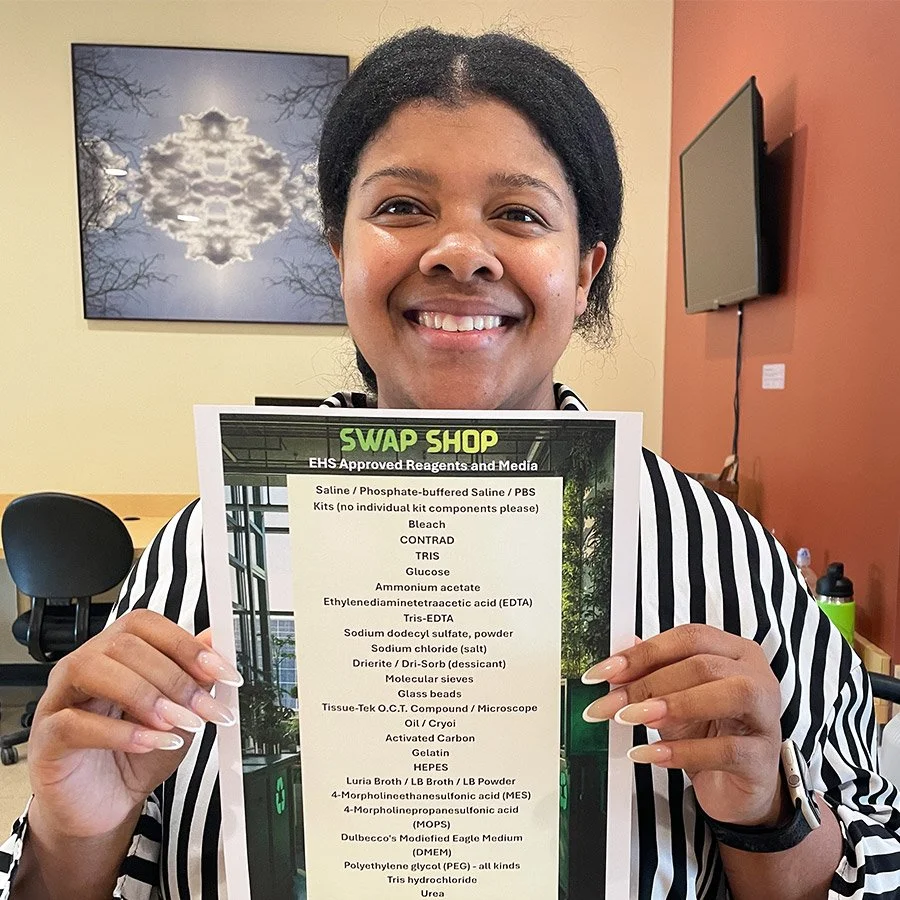
Boston Children's Hospital research EHS Program Safety Officer Marly Thomas supports green chemistry alternatives in research labs. Here, Marly shows a list of reagents approved for their Swap Shop event to repurpose unused materials for new projects.
Marly was enthusiastic about encouraging the adoption of green chemistry alternatives whenever possible. Providing practical information on viable, less-toxic chemical approaches opens scientists' minds to laboratory sustainability and to protecting their own health in the lab. Researchers are focused on science. After becoming aware, a little lively messaging can help keep up the momentum. Chuck Blanchette has been known to break out a Ukulele to capture scientists’ attention at the end of a monthly lab meeting for green labs announcements. The green team’s efforts have been fruitful. When a student researcher moving on to medical practice tells the person filling her role, “It’s part of the job,” that shows a green lab culture is being carried forward.
Cheers to Boston Children’s Hospital's green labs for serving as role models by conserving resources and protecting the environment for future generations!
LEARN aBOUT mORE sUSTAINABILITY tRENDS iN lIFE sCIENCE

In this interview, NEB sustainability manager, Levi Rogers, shares how taking a closer look at everyday lab workflows can uncover practical, site-specific opportunities to reduce waste—without compromising safety, rigor or productivity. You may find that solutions already exist for your own bench work.