Labconscious®

Connecting biologists to green labs and sustainability
  • Home
  • Blog
  • Green Lab Tips
  • Lab sustainability training game
  • Resources
    • Laboratory Recycling
    • Guidance on best practices
    • Green Chemistry
    • Supportive Data, Guides and Tools to Optimize Laboratory Energy Consumption
    • Grants and Funding
    • Laboratory equipment and supplies reuse
    • Play & Learn How to Minimize Laboratory Waste
  • Search our site
  • Green Lab Groups
  • Green Lab Supplies and Laboratory Equipment Guide
  • Home
  • Blog
  • Green Lab Tips
  • Lab sustainability training game
    • Laboratory Recycling
    • Guidance on best practices
    • Green Chemistry
    • Supportive Data, Guides and Tools to Optimize Laboratory Energy Consumption
    • Grants and Funding
    • Laboratory equipment and supplies reuse
    • Play & Learn How to Minimize Laboratory Waste
  • Search our site
  • Green Lab Groups
  • Green Lab Supplies and Laboratory Equipment Guide

Blog

A sustainability blog for biologists whose goal is to reduce laboratory waste, use green chemistry, and improve efficiency. Green labs thrive!

  • All
  • Biotechnology
  • Campus Sustainability
  • Cell Culture
  • Cold storage
  • Energy and Emissions
  • Ewaste
  • Fieldwork
  • Funding
  • Green Biotech
  • Green Chemistry
  • Green Lab Certifications
  • Green Lab Tips
  • Green Procurement
  • Green Science Buildings
  • Greening Champions
  • Greening Lab Materials
  • Lab Certification
  • Lab Safety
  • Lab Supplies
  • Lab Supply Chain
  • Laboratory Equipment
  • Microbiology
  • Model Organisms
  • Molecular Biology Waste
  • Natural Conservation
  • Nature Conservation
  • Pipette Tip Waste
  • Plastics
  • Programs and Logistics
  • Recycling
  • Reuse
  • Robotics
  • Scientific Communications
  • Sustainable Lab News
  • Sustainable Living
  • Synthetic Biology
  • Technology
  • Travel
  • Waste Audits
  • Water
""

The Wyss Institute Delivers Materials Inspired by Biology and Adopted by Industry

Nicole Kelesoglu July 28, 2026

Engineering a new material type is impressive; anticipating long-term health and ecosystem impacts of an engineered material takes real foresight. Within the Harvard University system, the Wyss Institute develops improved, nature-inspired materials to solve real-world problems through concerted engineering and scientific R&D, culminating in commercialization. As global regulatory agencies increasingly scrutinize materials used in manufacturing, medicine, and agricultural systems for far-reaching environmental consequences, industry-ready solutions are welcome.


Scientists making a positive environmental impact

The Wyss Institute is a non-profit at Harvard University with a mission to develop biologically inspired materials and devices to solve critical medical and environmental problems. First, they identify which new material options are in demand in the marketplace, and then their engineers and scientists develop solutions that are patented and commercialized. The institute was primed to recognize that man-made material pollution is driving chronic health conditions. About 90% of its research focuses on human health. The Wyss’s Laboratory for Sustainable Materials Research and Innovation supports early-stage research into technologies to transform how materials are sourced and used. The laboratory focuses on developing technologies to reduce environmental impacts while maintaining performance in real-world applications.

Dr. Emily Stoler is a Principal Scientist in the Sustainable Materials group at the Wyss. Furthermore, she is an Advanced Technology member with industry experience developing sustainable materials. As a chemist, she teams with synthetic biologists, medical doctors, engineers and business development team members in an academic setting focused on solving critical environmental problems.

Labconscious and New England Biolabs thank Dr. Stoler for giving her talk about this work at our Go Green Symposium. The innovations shared in this quick talk will give you hope for the future. The Wyss Institute is also working to address the plastic waste crisis and to develop eco-friendly, affordable air and water purification systems.
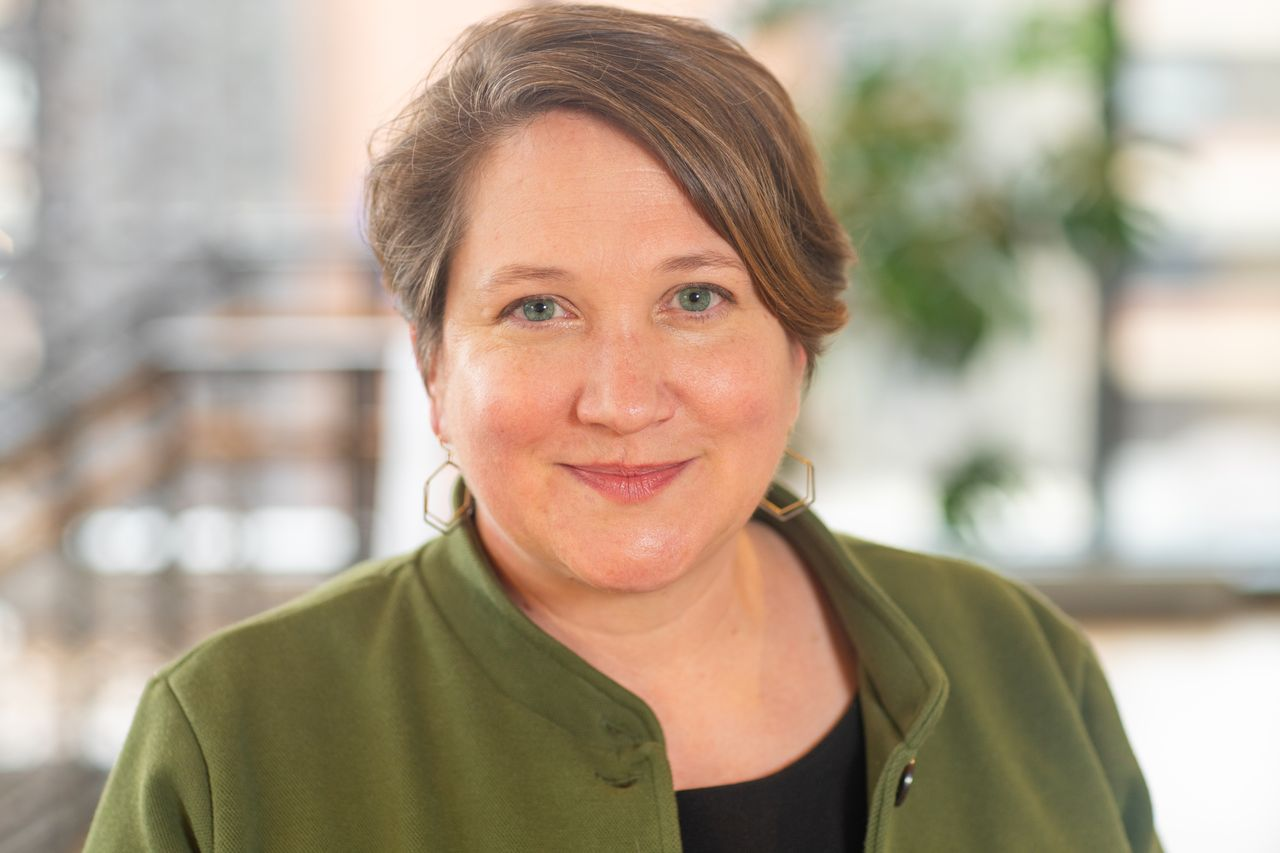
Emily Stoler Ph.D., headshot

“We aren’t going to build a sustainable future by exerting more control, instead we need to think about designing materials that align with our living system.’

— Emily Stoler, Ph.D., Principal Investigator, Sustainable Materials Lab, The Wyss Institute

Designing Materials for a Living Planet
For much of the last century, materials were optimized for durability, performance, and cost, often without considering what happens when those materials enter biological and environmental systems. Advances in biology, artificial intelligence, and materials chemistry are beginning to change that perspective by bringing biological thinking into the design of new materials and technologies. Closer collaboration between chemists, engineers, and biologists opens new pathways for innovation and sustainability, helping us imagine solutions that better align with the dynamics of our living world.


The More you know: the push for sustainably designed Materials

Dependence on materials with few or no practical greener substitutes poses a major challenge to integrating environmental sustainability into modern life. How did we get here? There may have been a bit of cognitive dissonance involved. However, I like to think that picture has just gotten clearer over time. Per- and polyfluoroalkyl substances (PFAS) represent a well-known example of the challenges to replacing high-performing materials that have become deeply embedded in modern infrastructure and manufacturing. Health threats associated with PFAS were once murkier. PFAS-related effects were gradual enough that, as a society, we tended to hold our noses to keep critical systems moving. Then things changed. In recent years, standard detection methods evolved. Labs can now detect more PFAS types using non-targeted approaches. More diverse samples (drinking water, soil, human tissue, blood, etc.) can be tested. Analyses are supported by more data, available from higher-throughput methods. Clearer patterns emerged from epidemiological population studies. In other words, industry leaders and global regulators can now consider accumulated evidence to better balance public health risks from PFAS for each particular use case. There is openness to equally performing material alternatives that are economically feasible. That is progress that scientists can build on.


LEARN aBOUT mORE sUSTAINABILITY tRENDS iN lIFE sCIENCE
Blog
Greening Research Labs at Boston Children's Hospital
June 22, 2026
Greening Research Labs at Boston Children's Hospital
June 22, 2026

Since launching a grassroots sustainability initiative in 2020, the Boston Children’s Hospital (BCH) Green Labs program has expanded, helping to save the equivalent of the energy used by 89 homes each day—and reducing lab freezer failures by 68%. What’s behind all the improvements? A compelling “why.”

June 22, 2026
Five Biotech Products Helping to Meet Global Sustainability Goals
September 12, 2023
Five Biotech Products Helping to Meet Global Sustainability Goals
September 12, 2023

Policymakers are looking to biotechnology as they seek better ways to meet the needs of nearly eight billion people while conserving resources and protecting nature - all in the context of volatile economic conditions. Let’s cheer on five biotechs delivering products to improve sustainability and then touch on integrity in life science.

September 12, 2023
Tackling Waste: 5 Steps to Less Plastic Waste in the Lab
September 9, 2019
Tackling Waste: 5 Steps to Less Plastic Waste in the Lab
September 9, 2019

Life sciences laboratories are another area in which plastic waste can be reduced. Approximately 5.5 million tons of plastic waste are produced every year in life sciences laboratories alone, including items like pipette tips, nitrile gloves and cell culture flasks. In the age of global waste pollution and the ubiquity of plastic in the world around us, this is definitely too much. It can’t all be changed, but improvements are possible in some areas.

September 9, 2019
Blog
Estimating the Carbon Cost of E. coli Transformations
October 21, 2024
Estimating the Carbon Cost of E. coli Transformations
October 21, 2024

Over the past year, Célia Algros took part in a project to discover microbial enzymes that could metabolize nucleosides in an internship at NEB. In an offshoot of this project, she also surveyed energy consumption, consumables, and waste generated to estimate the carbon cost of her E. coli transformations. The effort gave her a new appreciation for both the complexity of calculating carbon footprints and the sizable environmental impact of experiments.

October 21, 2024
A Garden to Inspire Sustainability at King’s College London
September 9, 2024
A Garden to Inspire Sustainability at King’s College London
September 9, 2024

Biologists often collaborate with non-scientists to improve environmental footprints. Events and spaces that remind us of our place in nature are a great way to connect everyone in a school or workplace to sustainability goals. Megan Williams, was a Research and Core Team Technician in the School of Cardiovascular and Metabolic Medicine & Sciences at Kings College London, when she saw an empty outdoor space on her urban campus and envisioned a community garden for fellow biologists, students, staff, and campus workers.

September 9, 2024
Drosophila Delivers Sustainable Science
June 21, 2024
Drosophila Delivers Sustainable Science
June 21, 2024

Drosophila is strongly associated with scientific discovery, but this model organism also represents practical advantages for sustainability from research to industry. When you look at the field you can’t help being impressed by the resources conserved by the approach.

June 21, 2024
InGreen Biotech, Synthetic Biology, Green Chemistry TagsWyss Institute Sustainable Materials
  • Blog
  • Older
  • Newer

Get insights on specific green Lab goals

No results found

Join us!

Get monthly articles and green lab tips to your inbox.

Thank you for signing up for monthly articles and green lab tips!


Interact with the Labconscious community


Email us!

How do you make your biology lab more sustainable?


linkedin-unauthyoutube-unauthx-formerly-twitter-unauthbluesky-unauth
  • Terms of Use
  • Privacy Policy
  • About
  • Contact
  • Cookie Policy
 
New England Biolabs
 

240 County Road
Ipswich, MA 01938-2723

Labconscious® is a registered trademark of New England Biolabs, Inc.

© Copyright 2026 New England Biolabs. All Rights Reserved.

Labconscious®

Connecting biologists to green labs and sustainability

Labconscious is an open resource for biologists to support sustainability and green laboratory work to reduce the environmental footprint of bench science.

New England Biolabs | 240 County Road, Ipswich, United States

linkedin-unauthyoutube-unauthx-formerly-twitter-unauthbluesky-unauth