

Laboratory sustainability is designed to both protect our environment and to target laboratory operational efficiency. Today, lab efficiency is being tested as scientists tackle vaccine development., low lab stocks and lab disinfection concerns.
Read More
The CSL labs in Montreal are about 15 minutes away from the Biosphere, the only museum in the Americas dedicated to understanding and protecting ecosystems. Isn’t the Saint Lawrence river lovely?
ECCC Aquatics Labs ensured transparency for a new mixed lab plastics recycling program
A team of nine women working in the aquatics labs at the Centre St-Laurent (CSL) in Montreal has launched a lab plastic recycling program that overcomes some of today’s biggest challenges - #1 finding a service that will accept mixed lab plastics and #2 making the process user-friendly. Most importantly, this lab recycling program establishes transparency.
Read More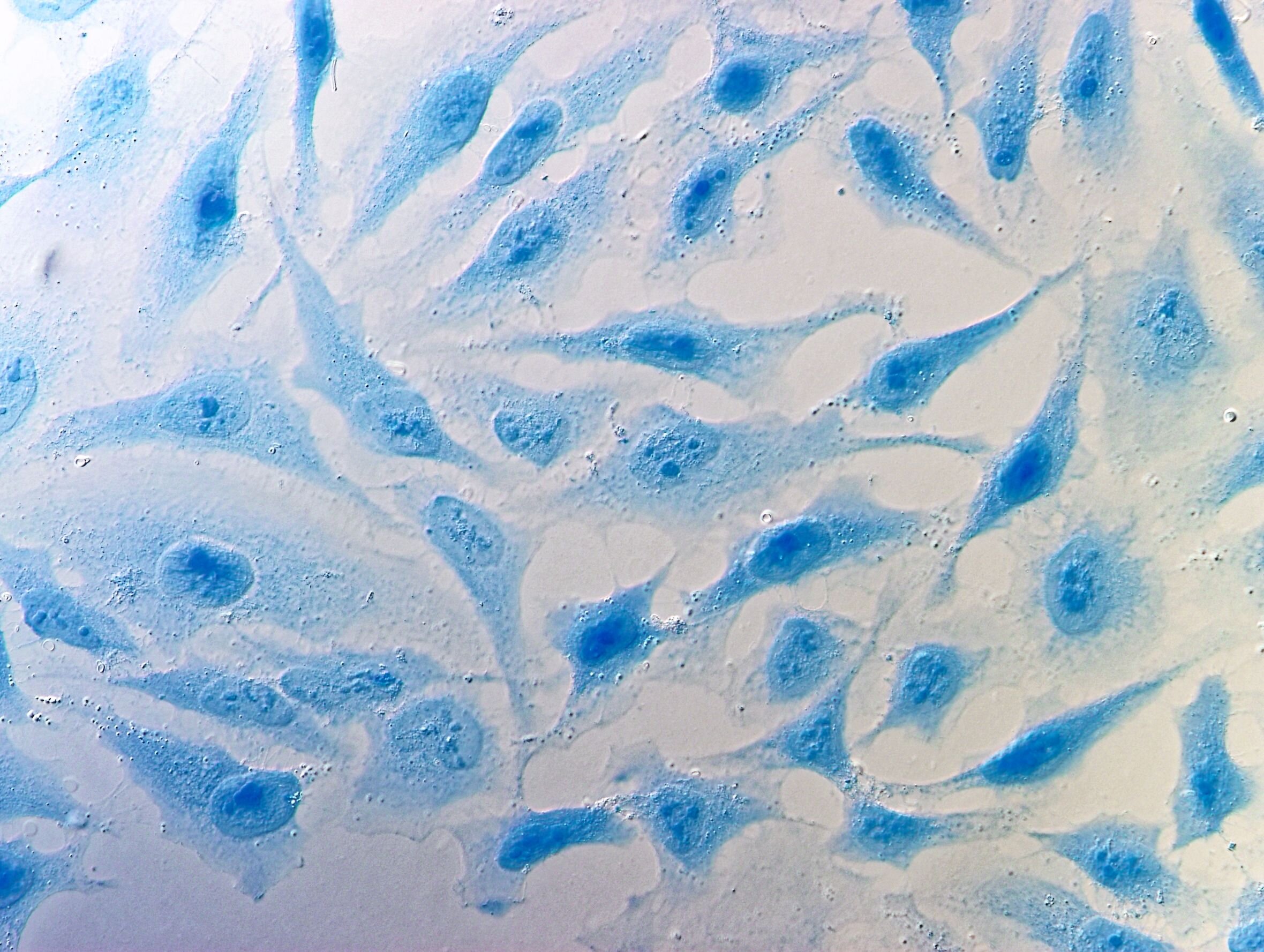
That familiar view of HeLa cells stained with Coomassie blue.
Could Ozone be used to overcome single use plastic waste in cell culture?
Cell culture vessels are one of the most challenging areas of single-use plastics to consider eliminating from biology labs. Never known for complacency, scientists are seeking are already seeking higher performance to optimize cell culture conditions. From a “labconsicous” perspective, ideally, both cell culture growth conditions and sustainability could be improved. This post considers a controversial idea. Could a system for reusable mammalian cell culture plastic flasks ever be developed?
Read More
University of Cambridge Chemists collaborated with Genlab engineers to design a faster, safer and more energy efficient lab dryer: the E3
Scientists depend on an ecosystem of supporters to run laboratories. Today’s blog features a collaboration initiated by University of Cambridge chemists with Genlab engineers, that resulted in a revamp of the humble lab drying cabinet. The result of this design collaboration is the e3. It’s a machine that dries faster, has precise digital temp settings and can save 72% of energy.
Read More
Figure 1: A mobile device displays the Elemental Machines platform equipment utilization overview page. Equipment utilization is determined through open door events. The platform also tracks open door duration and also provides some open door statistics.
Go Green and Maximize Laboratory Productivity with AI lab equipment monitoring
There’s a common misconception that going green is expensive and a distracting obligation for large organizations. Few realize that it’s possible to create a greener lab space while actually reducing costs! Artificial intelligence tools can offer significant insight to any organization. Laboratories can reduce energy consumption and thus save money while simultaneously increasing lab productivity and protecting precious lab samples. Let's examine this technology in further detail.
Read More
Tackling Waste: 5 Steps to Less Plastic Waste in the Lab
Life sciences laboratories are another area in which plastic waste can be reduced. Approximately 5.5 million tons of plastic waste are produced every year in life sciences laboratories alone, including items like pipette tips, nitrile gloves and cell culture flasks. In the age of global waste pollution and the ubiquity of plastic in the world around us, this is definitely too much. It can’t all be changed, but improvements are possible in some areas.
Read MoreRheaply's pitch video for Verge 19's Accelerate competition.
Rheaply’s Virtual Lab Surplus Platform is a semi-finalist for VERGE19 Accelerate
To get to the stage at VERGE, Rheaply is depending on scientific community members (like YOU) to vote by August 30th. This would not only be an opportunity for Rheaply’s platform to be seen by many. It’s a big opportunity to promote awareness of the millions of tons of surplus and equipment that could be shared by scientists across the country.
Read More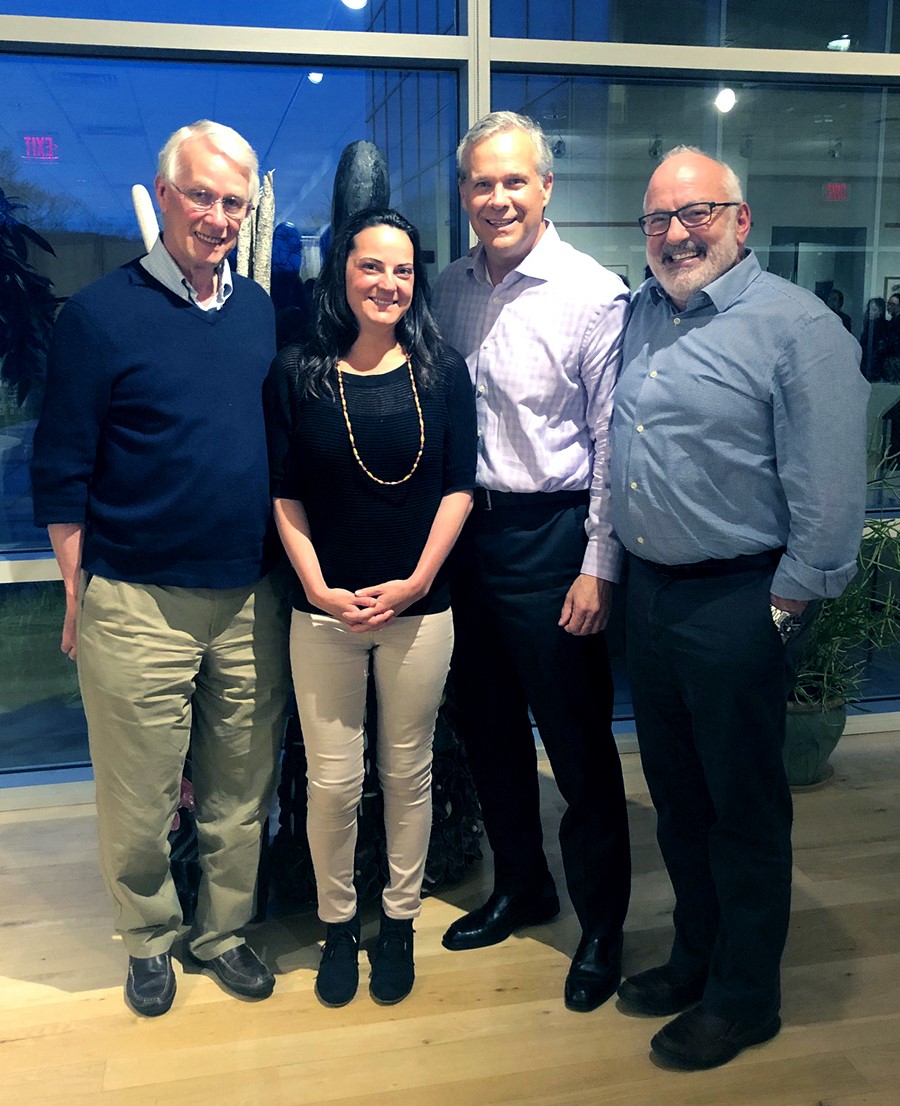
Environmental stewardship winner Samantha Romanick with New England Biolabs CEO James Ellard, Executive Director Peter Nathan, PhD and Sir Richard Roberts, PhD Chief Scientific Officer and Noble Prize winner.
Refill not landfill: The Campus Refill Initiative
Molecular biology grad student Samantha Romanick brings environmental stewardship to campuses by advancing re-fill and re-use options for all. Read her interview and watch her talk to learn more!
Read More
MassBio talks showcase that Massachusetts needs cooperation from biology labs to achieve sustainability
Scientists who incorporate lab sustainability into the culture of life science are doing the right thing for their communities. The Boston area is the proud home to an extraordinarily high number of biologists, pushing the frontiers of science. In a sense it’s quite the contrast, The city is now nearly 400 years old! But, let’s just say that historical construction planners for greater Boston did not foresee supporting so many labs.
Read More
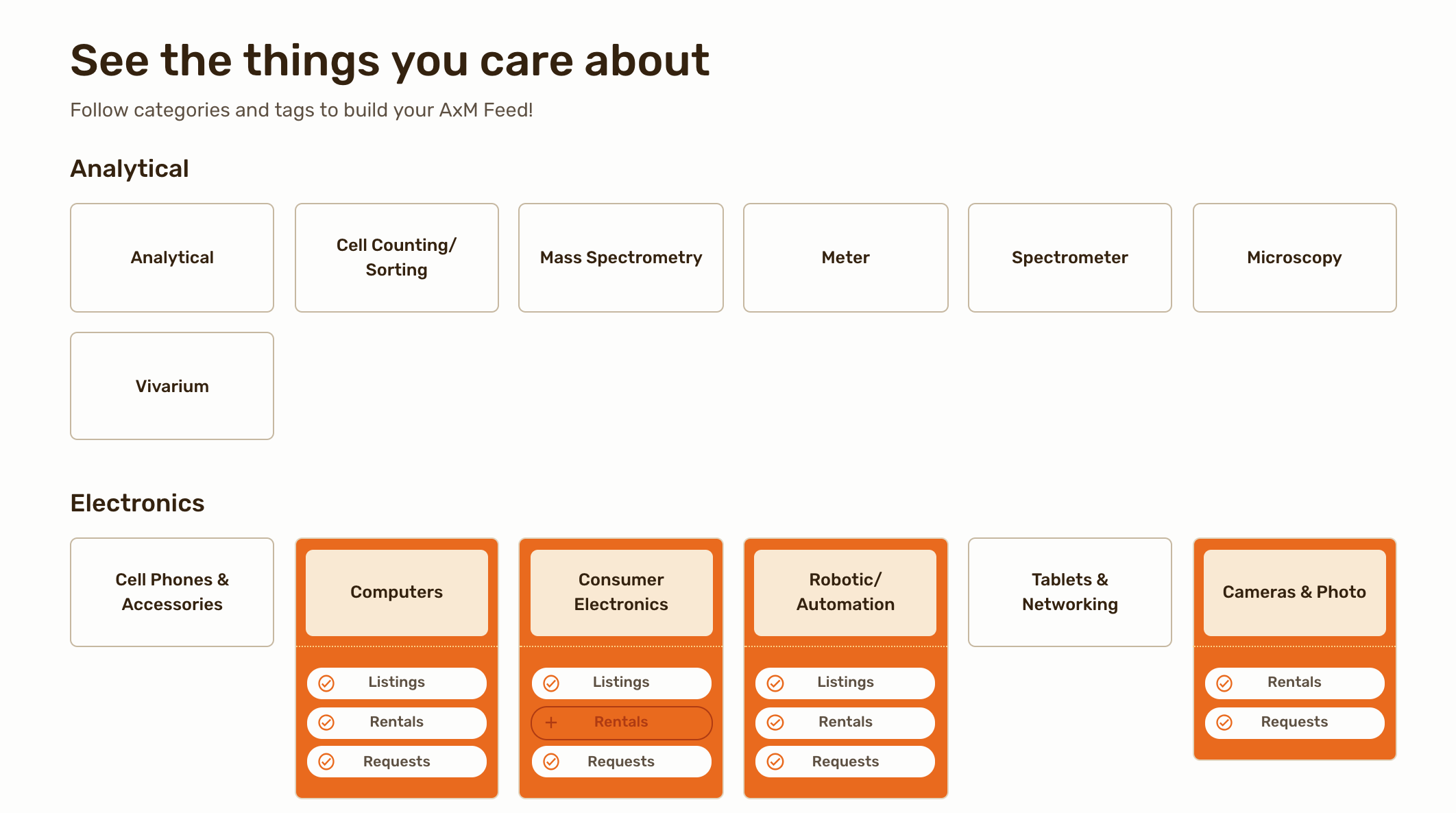
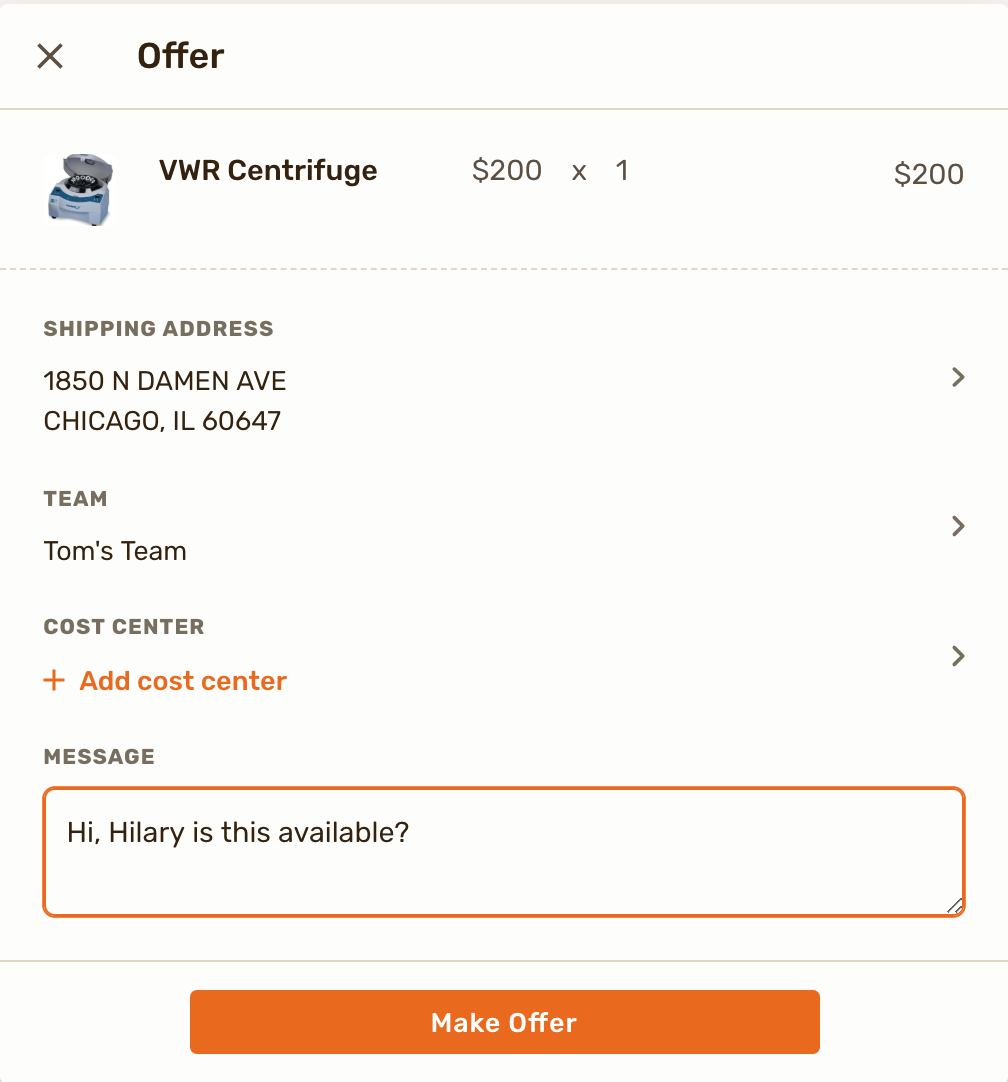
Using Rheaply to beat the odds against sharing lab supplies and scientific equipment
Northwestern University has an ace in the hole when it comes to making good use of lab surplus. Labs at the world-renowned Fineberg Shool of Medicine are now connected via a cloud-based resource-sharing technology, called Rheaply. Rheaply combines the ease of use of social media ease with the marketplace functionality of an ebay. No barcode labels necessary!
Read More