Learn why your university should run a green labs fair, and how to do it successfully, in this interview with University of California San Diego Sr. Social Responsibility Program Manager, Mark Ortiz.
Read More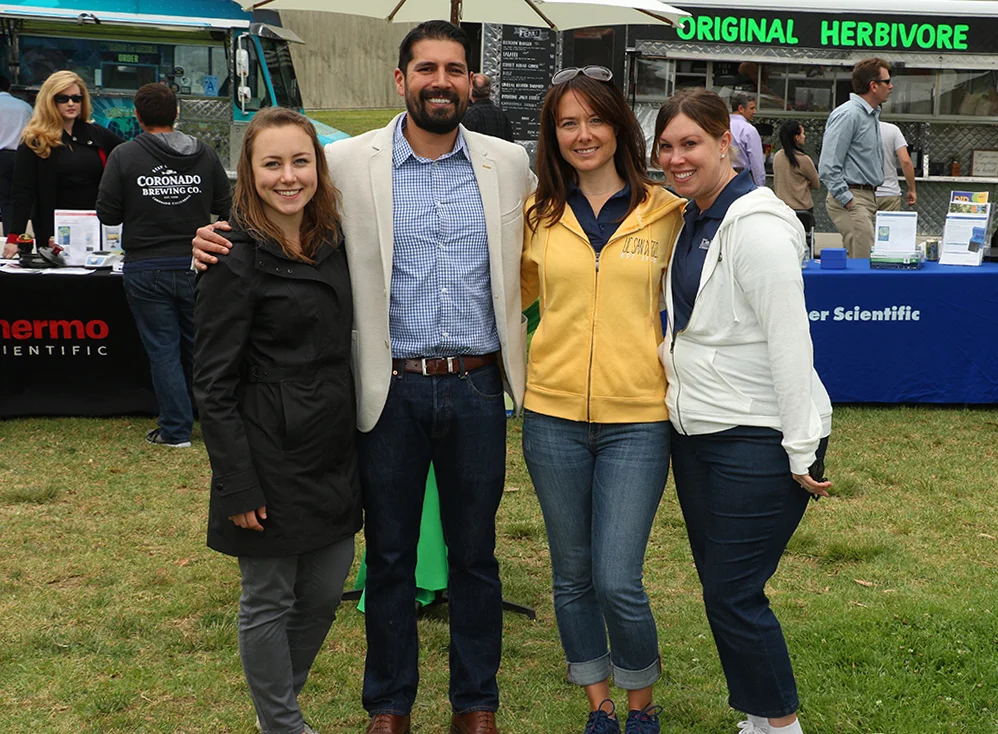


Blog
A sustainability blog for biologists whose goal is to reduce laboratory waste, use green chemistry, and improve efficiency. Green labs thrive!
UC San Diego Green Labs Group Members and Mark at the Green Labs Fair.
Millipore Sigma uses a “Design for Sustainability Process” to improve performance and meet sustainability criteria
Three food trucks welcomed by all!
New England Biolabs displays their environmentally friendly Monarch kits developed for higher DNA and RNA yields.
Learn why your university should run a green labs fair, and how to do it successfully, in this interview with University of California San Diego Sr. Social Responsibility Program Manager, Mark Ortiz.
Read MoreThe words "game changer" gets thrown around a lot, but in this case it's a bulls eye. Academic, government and industrial laboratories are using this instrument to reduce consumables costs by 90%+ and to prevent plastic pollution. Learn more in this Labconscious interview with inventor and CEO Ali Safavi.
Read MoreHelp us keep the momentum up for everyone in life science! Please invite Labconscious to cover your green lab story! If you are doing an environmentally friendly life science research project, let us know! If you want to share efforts…
Read MoreWhat is the best option to prevent E-waste? Reuse! High quality lab equipment should go to labs, not landfills! Learn how Biosurplus offers a smart and eco-friendly way to extend the life cycle of laboratory equipment for science.
Read More
PhD student, Laurie Gray, sets up an experiment in the Hammerskjöld-Rekosh Lab on the seventh floor of Pinn Hall. Their lab participates in vendor polystyrene reuse programs.
University of Virginia scientists are enhancing their lab work space with money saving lab swaps, a new recycling program, and an eye on green procurement. In this syndicated post UVA Green Labs Specialist Christine Alencar spotlights UVA’s three part Green Lab event series on waste management.
Read MoreWhen you think of going "green" in the laboratory, does it sound like a distraction? The truth is that there are big benefits to updating your lab material flow system. There are good reasons why research institutions and corporations have re-invented how labs work to facilitate sustainability. Consider the following impact areas of laboratory waste.
Read MoreLabs that require the regular use of rooms to decontaminate employees know how much of a misnomer the term “cleanroom” can be. Sure, these areas prevent allergens and pollutants from affecting the workplace and potential consumers, but one look at the energy costs of operating such an area reveals an ironic truth: running a cleanroom can be a dirty business.
Read MoreFreezers are among the biggest energy consumers in a lab, and as a result they can cost a lab a lot of money. The International Freezer Challenge promotes best practices in cold storage management and awards the labs who have done the most to save energy and improve their sample storage.
Read MoreFume hoods present a unique opportunity for the University of Virginia to reduce greenhouse gas emissions while informing researchers of better safety practices. #shutthesash
Read MoreWhile biologists already have some choices for less toxic methods in their tool box, new discoveries in the field of green chemistry will lead to its faster adoption into life science lab work. The EPA and chemists collaborating internationally are pushing the frontiers of this trend for good reason.
Read MoreLabconscious is an open resource for biologists to support sustainability and green laboratory work to reduce the environmental footprint of bench science.
New England Biolabs | 240 County Road, Ipswich, United States